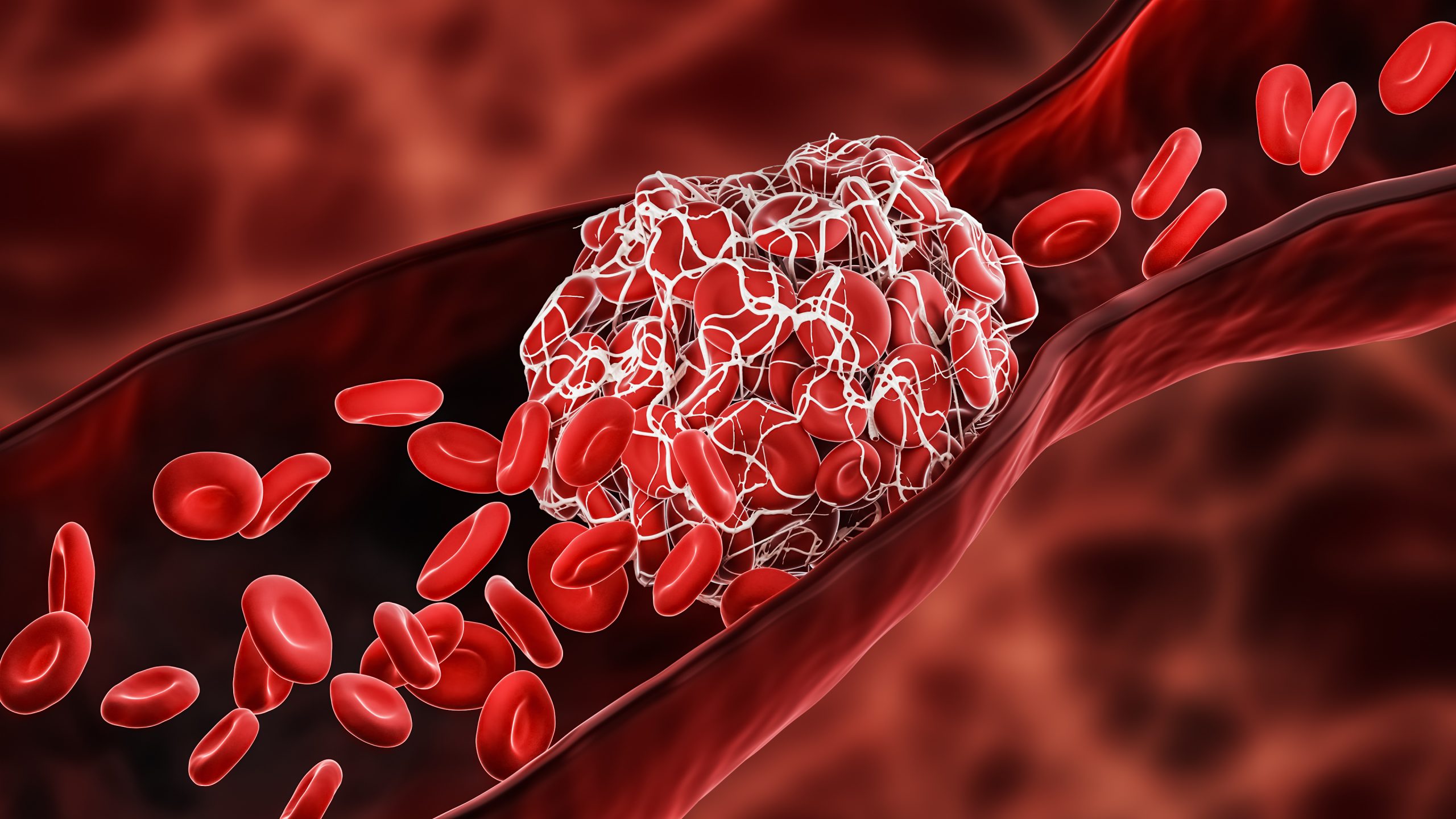
DVT/PE: blood clots in the legs or lungs—symptoms, risk factors, prevention and treatment.
- DVT symptoms: leg swelling, pain, warmth and redness (often one leg).
- PE symptoms: sudden shortness of breath, chest pain, fast pulse, fainting.
- Treatment and prevention: anticoagulants, early mobilization, and risk-factor control.
Deep vein thrombosis (DVT) happens when a clot forms in deep veins, usually in the legs. A pulmonary embolism (PE) occurs when part of a clot travels to the lungs and blocks blood flow.
Risk factors include recent surgery, long travel/immobility, pregnancy, cancer, smoking, obesity, and inherited clotting disorders. Not everyone has obvious risk factors, so symptoms should be taken seriously.
Treatment is usually anticoagulation (blood thinners). Prevention focuses on movement, hydration, compression in selected cases, and treating underlying risks. Suspected PE symptoms require emergency care.